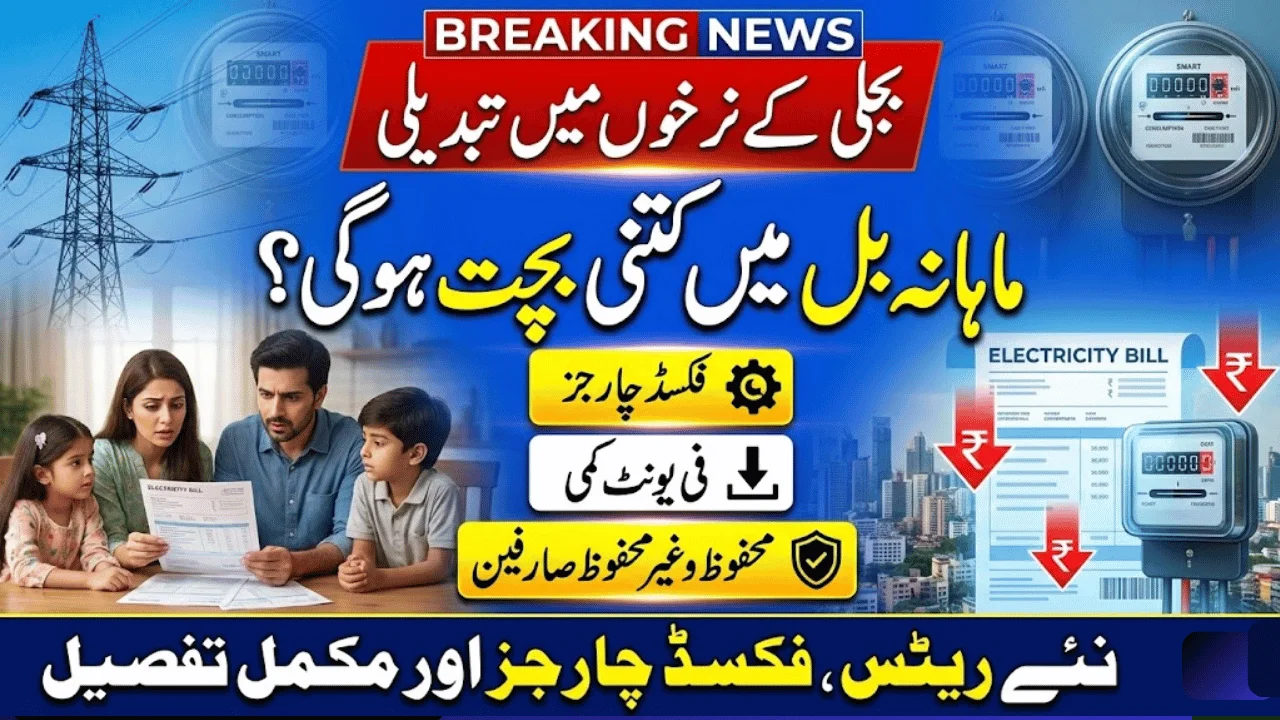
The federal government is considering a major revision in electricity tariffs and fixed charges for 2026, aimed at providing relief to domestic, commercial, and industrial consumers. The proposal includes lower per-unit electricity rates for higher consumption slabs, while also introducing fixed charges for lower-usage protected consumers for the first time.
Once approved by the cabinet, the plan will be forwarded to National Electric Power Regulatory Authority (NEPRA) for review and public hearing.
Who Are Protected & Non-Protected Electricity Consumers?
Before understanding the changes, it’s important to know the difference:
-
Protected consumers:
Households using up to 200 units per month (lower-income category) -
Non-protected consumers:
Households consuming above 200 units per month
New Proposed Fixed Charges for Domestic Consumers (2026)
Under the new proposal, fixed monthly charges will apply to both protected and non-protected consumers, unlike the earlier system.

🔌 Proposed Fixed Charges – Monthly
| Consumer Type | Monthly Units | Proposed Fixed Charge |
|---|---|---|
| Protected | Up to 100 units | Rs. 200 |
| Protected | Up to 200 units | Rs. 300 |
| Non-Protected | Up to 100 units | Rs. 275 |
| Non-Protected | Up to 300 units | Rs. 350 |
| Non-Protected | 400–600 units | Rs. 675 |
| Non-Protected | Above 700 units | Rs. 675 (Reduced by Rs. 325) |
📌 Key Change:
Households consuming more than 700 units may see a reduction in fixed charges, while low-usage households may pay fixed charges for the first time.
Proposed Electricity Tariff Reduction (Per Unit Relief)
Along with fixed charges, the government is proposing per-unit tariff cuts to reduce monthly bills.
Proposed Per-Unit Electricity Relief
| Monthly Consumption | Proposed Reduction |
|---|---|
| Up to 400 units | Rs. 1.53 per unit |
| Up to 500 units | Rs. 1.25 per unit |
| Up to 600 units | Rs. 1.40 per unit |
| Up to 700 units | 91 paisa per unit |
| Above 700 units | 49 paisa per unit |
Relief for Commercial & Industrial Consumers
The proposal also extends relief beyond households:
Commercial Sector
-
Consumers with 5 kW or higher load
-
Proposed reduction: Rs. 1.15 per unit

Industrial Sector
-
Significant proposed relief
-
Reduction of up to Rs. 5 per unit
-
Aimed at lowering production costs and supporting economic activity
Why Is the Government Revising Electricity Tariffs?
The proposed changes are aimed at:
-
Reducing financial pressure on middle- and high-usage households

-
Supporting businesses and industries
-
Encouraging economic stability
-
Making the electricity pricing system more balanced
However, the introduction of fixed charges for protected consumers has raised concerns among low-income households.
Approval & Next Steps
-
Proposal will be reviewed by the federal cabinet

-
After approval, it will be submitted to NEPRA
-
Public hearing expected on 10 February 2026
-
Final decision will be announced after regulatory review
What Does This Mean for Consumers? (Quick Summary Box)
✅ Higher-usage households may benefit from lower unit rates
⚠️ Low-usage protected consumers may face new fixed charges
✅ Industries may get significant cost relief
❌ Final impact depends on NEPRA’s approval
Final Words
The proposed electricity tariff and fixed charges for 2026 reflect the government’s attempt to balance relief with revenue sustainability. While higher consumption slabs may enjoy noticeable savings, the introduction of fixed charges for protected consumers could impact low-income households.
Consumers are advised to wait for NEPRA’s final decision before making assumptions about their upcoming electricity bills.
Disclaimer
This article is based on proposed policy changes. Final electricity rates and fixed charges will apply only after official approval by NEPRA. Always refer to official notifications for confirmed tariffs.


All content on this website is shared for general informational purposes only. gymholics.pk is an independent platform and is not affiliated with any government department, fitness authority, or official organization. Readers should use this information responsibly and consult relevant professionals or official sources when needed.